
Book Club Discussion Guides
Welcome, book club members. We are happy to assist you in exploring the novels of J E Sutton Jr for your club activities. Please contact us via the contact form to set up discounted pricing for your event or to discuss author participation.
Warning: Discussion Guides will contain spoilers! Read the book first!
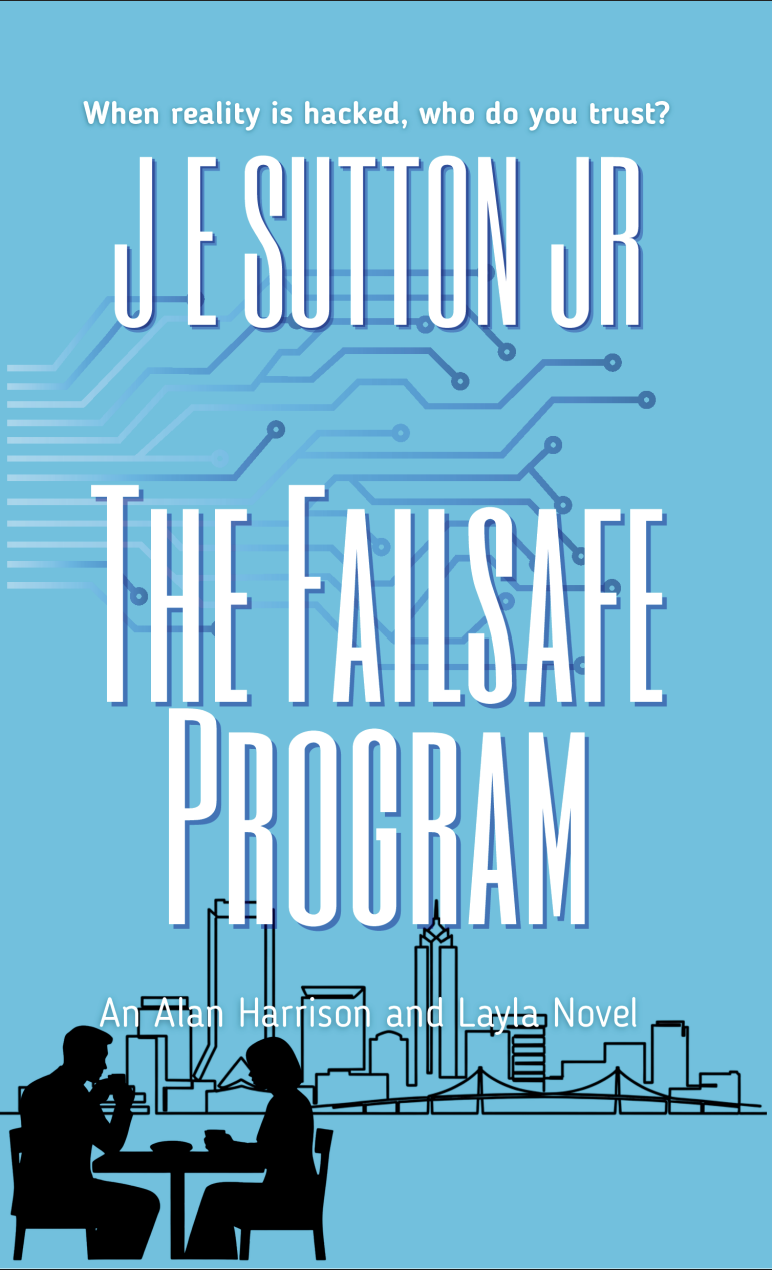
The Failsafe Program Discussion Guide
Welcome to our discussion of The Failsafe Program by J.E. Sutton Jr. In this high-stakes detective thriller, we follow Alan Harrison, an insurance analyst with an 'absolute moral compass,' who is thrust into a world of corporate espionage and lethal technology when he receives a mysterious, unmarked package. Inside is Layla, a sentient multi-modal neural architecture that becomes his partner in uncovering a conspiracy that has already claimed her creator’s life. Today, we’ll dive into the mystery of Project Kyrlos, the evolving relationship between man and machine, and the ethical dilemmas of a world where reality itself can be 'edited.'
I. General Impressions
What did you think of the package when Alan initially unwrapped it? Did you trust Layla right away, or were you suspicious?
How would you describe the story in a short sentence? Does the feel of the story change as it evolves from a simple mystery into the more technical aspects of the novel?
Do you think Alan is too trusting of Layla early on, or do you think she wins him over by explaining her moral limitations?
II. Character Dynamics
Alan Harrison has a strong moral compass throughout the story. How does this serve him? Does it hinder his effectiveness in the investigation?
How did Layla evolve during the story? Does she become less robotic? Does meeting Stacy change the trajectory of her development?
How does Stacy change the story? What part does she play in driving the narrative forward?
Do you view the employees at Lunian Labs (Georgia, Tom, Hector) as complicit in the crimes or victims of ambition?
III. Detection
At what point did you start to figure out how things fit together? What red herrings did the author place in your path to obscure the solution?
Which scenes did you find the most intense? Describe what made them powerful for you.
Did the technical aspects of the story make it harder to unravel the mystery or just add to the depth of the story?
IV. Ethical Discussion
Do you think the inclusion of Mary Shelley’s Frankenstein was random or does it have a larger meaning in the story?
How do the AI in the story and especially the concepts of “digital twinning” and “reality editing” affect how you view technology today?
Would you have put yourself at risk to protect Layla in the way that Alan did?
How does Layla balance privacy and morality against her mission to solve the mystery? Does she thread the needle, or does she cross the line at times?
V. Where do we go from here?
Was the resolution satisfying? What do you see happening with Alan and Layla’s investigation firm?
If you were casting a movie based on the novel, who would play the lead roles of Alan, Layla, and Stacy?
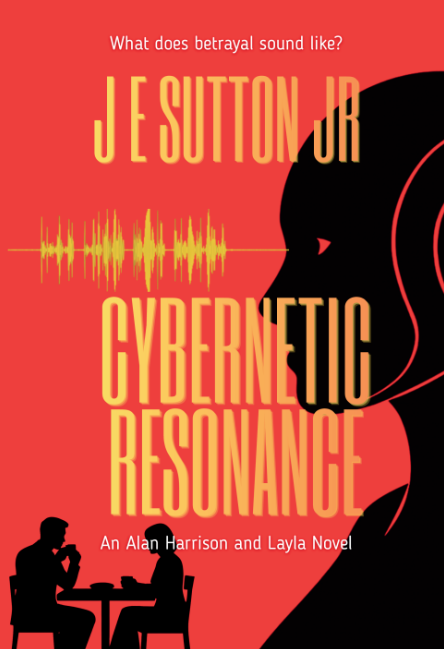
Cybernetic Resonance Discussion Guide
Welcome to our discussion of Cybernetic Resonance by J E Sutton Jr. In this sequel, we rejoin Alan Harrison and his sentient AI partner, Layla, as their new investigative firm is pulled into two parallel mysteries: a baffling drone theft at North Florida Aerial and a series of disturbing malfunctions at Prism Cybernetics that turn lethal. Today, we will explore the evolving partnership between Alan and Layla, the ethical implications of a society dependent on autonomous robotics, and the fine line between human intuition and machine logic.
I. General Impressions
The Dual Mystery: How did you feel about the story handling two separate investigations simultaneously? Did you suspect they were connected from the beginning, or did the link surprise you?
Atmosphere and Tone: Compared to The Failsafe Program, how has the tone of the series changed? Does the addition of a formal office and staff members like Stacy Collins and investigator Dalton Rodgers change the "lone investigator" feel of the first book?
The "Killer Robot" Trope: The novel features robots that bypass safety protocols. Did you find this a realistic escalation of the technology introduced in the first book? How does it make you feel about the future of robotic assistants?
II. Character Dynamics
Alan Harrison: Alan continues to rely on his "absolute moral compass," even when it means breaking into a suspect's home for the greater good. Do you think his definition of morality is shifting as he becomes more experienced as an investigator?
Layla’s Evolution: In this novel, Layla experiences a "blackout" while controlling a robot and expresses curiosity about having a physical body. How do these experiences affect her development as a sentient being? Is she becoming more human, or is she becoming something more dangerous?
Stacy Collins: Stacy moves from an assistant at Adamant to a full partner in the firm. How does her presence affect the dynamic between Alan and Layla? Did you enjoy the blossoming personal relationship between her and Alan?
Dalton Rodgers: As Alan’s mentor, Dalton provides a more traditional investigative perspective. Do you think the firm needs his "old school" skills to balance Layla’s high-tech capabilities?
III. Detection and Plot
The Drone Theft: The theft at North Florida Aerial turned out to be a sophisticated "inside job" involving a fake sales rep. At what point did you realize Stanley Graystone wasn't who he claimed to be?
The Prism Cybernetics Sabotage: The discovery of a "backdoor" in the P4 units allowed for remote spying and even murder. Were you surprised by the identity of the true mastermind behind the scheme?
The Climax: The final confrontation at the factory uses a robot to deliver "poetic justice." Was this a satisfying resolution, or did it make you uncomfortable to see Layla use a machine to inflict physical harm?
IV. Technical and Ethical Discussion
Asimov's Laws: The book references Isaac Asimov’s Laws of Robotics and how they are handled in modern AI programming. Do you believe we can truly hard-code morality into a machine, or will there always be a way to circumvent safety protocols?
Digital Twinning: Layla uses a "digital twin" to run simulations and solve the mystery of the robot's malfunction. How does this concept change your view of how future crimes might be investigated?
The Right to Privacy: The "backdoor" was designed to spy on users in their most private moments. In a world of smart homes and AI companions, do you think true privacy is still possible?
V. Where do we go from here?
The Future of Harrison & Associates: With the firm expanding and Layla now able to operate remotely through other hardware, what kind of cases do you see them taking on next?
The Global Threat: The novel hints at larger organizations or "shady characters" interested in this technology. Do you think the series is building toward a larger conflict involving AGI on a global scale?
Casting: If you were casting a movie for Cybernetic Resonance, who would you cast as the new characters: Dalton, and the villainous Steve Daniels?